

Views: 0 Author: Site Editor Publish Time: 2026-07-01 Origin: Site
An alignment reading can look precise even when the setup is wrong. A Car Wheel Alignment Clamp that sits unevenly, shifts during rolling compensation, or blocks the target may introduce errors before any suspension adjustment begins. The issue is not whether every clamp is fixed at the same clock position, but whether it creates a stable, repeatable relationship between the wheel and the sensor.
Understanding which positioning details affect accuracy helps technicians avoid false readings, unnecessary corrections, and setup work. The sections below explain when clamp position matters, how to mount it consistently, and when remounting is the safer choice.
There is no universal clock position that makes every Car Wheel Alignment Clamp accurate. Image-based systems can determine the wheel axis by observing how a target’s position and orientation change as the wheel moves. The target does not always need to sit at the rim’s geometric center when the mounting is stable and the required compensation procedure is completed. Some adapter configurations can maintain measurement accuracy even when mounted slightly off center.
Approximate centering still helps the technician compare jaw engagement, maintain clearance, and spot visible tilt. It also provides a quick visual baseline before compensation begins. Centering is therefore a useful setup habit, not proof of accuracy by itself.
Position matters when it affects the physical or optical conditions required by the aligner. The chosen location should provide:
● A clear view of the complete target
● Clearance from the body, lift, turn plate, and suspension
● Access to the tightening mechanism
● Full contact away from valve stems, weights, covers, and damaged rim areas
● The target orientation required by the alignment system
A convenient position is wrong if it blocks the target or leaves one contact partly seated. An off-center mounting may still be acceptable when the adapter is designed for it and every contact remains secure. The operating procedure for the specific alignment system takes priority because different clamp and compensation designs establish the wheel reference in different ways.
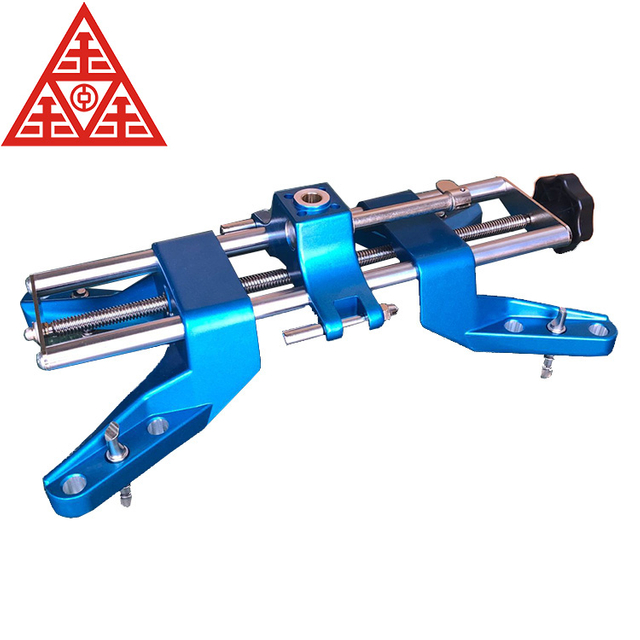
The visible rim face is not automatically a perfect reference plane. Wheel runout and small mounting variations can place the target face at an angle to the wheel’s true axis of rotation. If one jaw is shallower or a pad rests on an obstruction, the Car Wheel Alignment Clamp may hold the target in a tilted plane. Toe or camber readings can then include mounting error rather than vehicle geometry alone.
The direction of that error is not predictable from appearance. Clamp geometry, rim runout, and tilt direction all influence the displayed values, so inconsistent readings are a more useful warning than assuming a fixed numerical effect.
A clamp can feel firm while stationary yet settle when the vehicle rolls. Unequal tightening, shallow engagement, debris under a pad, an unsuitable rim feature, or worn components may let the frame rotate or rock. Once it moves, the target no longer has the relationship to the wheel that the system measured during compensation.
Inspect the mounting before changing toe or camber. A sudden shift after vehicle movement may come from the measuring setup rather than the suspension. Continuing with an unstable reference could lead to an unnecessary or incorrect adjustment.
Runout compensation separates repeatable variation in the wheel, adapter, and target shaft from the alignment angles. Depending on the system, the process may rotate a raised wheel or roll the vehicle through a controlled distance. This procedure removes angle errors caused by repeatable runout in the wheel and measuring assembly.
Compensation cannot rescue a loose Car Wheel Alignment Clamp. It models a fixed relationship as the wheel moves; it cannot preserve accuracy after the clamp slips. Any movement requires remounting and a fresh compensation sequence.
Mounting condition | Likely result | Correct response |
Clamp is visibly tilted | Increased mounting runout | Release and reseat it |
One jaw is shallower | Unequal contact pressure | Recenter before tightening |
Clamp moves while rolling | Compensation becomes invalid | Remount and repeat |
Target is obstructed | Interrupted tracking | Correct its position |
Begin by examining the rim flange, tire sidewall, valve stem, balance weights, wheel cover, and existing damage. Clean the contact areas so grit, grease, or brake dust cannot hold a pad away from the surface. This prevents the common mistake of tightening harder against an unsuitable position.
Choose locations where every jaw, finger, or pad can engage to its intended depth. Use suitable protective components on painted or polished wheels, and confirm that a properly sized Car Wheel Alignment Clamp matches the wheel diameter and contact geometry. Correct technique cannot compensate for an adapter outside its working range.
Open the clamp enough to place it without dragging across the wheel finish. Bring all contacts into position before fully tightening any one point, then compare their engagement depth. A four-point clamp should have balanced opposing jaws; a three-point unit should form a stable contact plane with all three points engaged.
Tighten progressively so the frame does not migrate toward the first jaw that grips. Check from the front for balance and from the side for tilt, gaps, or contact with a weight or damaged edge. Secure mounting means removing play, not applying the greatest possible force.
Apply light pressure at the top, bottom, and sides of the assembly. Any clicking, rocking, or rotation requires reseating. Confirm that the clamp also clears brake and suspension components during the movements required by the alignment procedure.
Set the target or sensor in the orientation required by the system. Camera-based equipment needs a clear line of sight throughout rolling compensation and caster sweep, not only while the vehicle is stationary. Verify that the target, shaft, and Car Wheel Alignment Clamp cannot touch the body, lift, or nearby equipment.
Complete the specified compensation sequence before trusting the displayed angles. Watch each assembly as the vehicle moves; stop if a jaw settles, the frame rotates, or the target changes orientation. A removed and reinstalled target must be compensated again because its mounting relationship has changed.
Do not begin mechanical adjustment merely because measurements appear on screen. First confirm that the mounting remains unchanged and the readings stabilize after the full procedure.
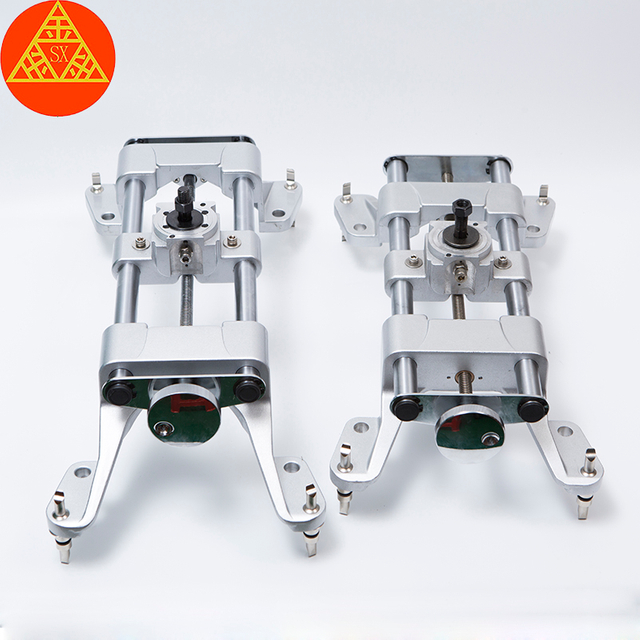
Every Car Wheel Alignment Clamp needs a rigid, repeatable connection, although designs distribute contact differently. A three-point clamp forms a triangular plane, so each point must engage fully without pulling the frame toward one side. A four-point design requires balanced opposing jaw depth and progressive tightening. Self-centering mechanisms reduce manual variation but cannot overcome dirt, damaged parts, incorrect sizing, or incomplete contact.
Dfeng offers three-point, four-point, magnetic, and customizable clamp configurations. High-strength aluminum and steel, precision machining, and durable surface treatments support different mounting requirements. These features do not change the basic accuracy standard: the adapter must remain stable throughout measurement and adjustment.
Working range affects the angle and depth at which contacts reach the wheel. Near or beyond the limit, jaws may engage too shallowly or require extensions. Careful positioning cannot make an undersized or oversized adapter secure.
Dfeng’s 10-inch alignment clamp has a standard working range of 10 to 25 inches, with extensions available for wheels up to 30 inches. It is designed for passenger cars and SUVs and uses aluminum, steel, and plastic components. Suitable reach allows the technician to seat the contacts as intended rather than improvise around the rim. Compatibility should be confirmed before tightening the Car Wheel Alignment Clamp, not after instability appears.
A straight-looking clamp can still have unequal contact or hidden play. Trust the installation only when every contact stays seated, the frame resists light pressure, the target remains visible, and readings stabilize after compensation. A repeated measurement should produce a consistent result within the aligner’s normal procedure and resolution. Repeatability tests the full relationship among the wheel, clamp, target, and measuring process.
When values do not settle, avoid chasing them through vehicle adjustments. Recheck the Car Wheel Alignment Clamp, repeat compensation, and compare the result. A stable reference should return a consistent measurement before work continues.
Remount the clamp if it shifts during rolling, repeatedly loses one contact, changes target orientation, or requires excessive force to remain attached. A noticeable reading change after the wheel returns to position also justifies checking the mount first. If the fault follows one clamp from wheel to wheel, inspect its jaws, arms, threads, pads, and target interface.
Good positioning cannot correct an unlevel rack, an out-of-calibration aligner, wheel damage, or worn steering and suspension parts. A level platform and a complete pre-alignment inspection are also necessary for reliable measurement.
Observation | Decision |
Clamp is stable and readings repeat | Continue with alignment |
Clamp shifted during compensation | Remount and compensate again |
Contacts cannot seat evenly | Choose another position or clamp |
Inconsistency follows one clamp | Inspect or service that clamp |
All clamps produce unstable readings | Check the platform, calibration, and vehicle |
Wheel alignment clamp positioning matters because stable contact, even engagement, proper clearance, and correct compensation all affect measurement repeatability. A Car Wheel Alignment Clamp does not need one universal clock position, but it must remain secure throughout rolling, rotation, and adjustment. When readings shift or fail to repeat, checking the mounting setup should come before changing vehicle geometry.
Dongguan Dfeng Smart Tech Co., Ltd. supplies wheel alignment clamps and related accessories designed to support consistent installation across different wheel sizes and alignment tasks, helping technicians reduce setup errors and work more efficiently.
A: No. The exact clock position is usually less important than secure, even contact, correct target visibility, adequate clearance, and completing the aligner’s required runout-compensation procedure.
A: Positioning affects accuracy when the clamp tilts, engages unevenly, blocks the target, or shifts during wheel movement. These conditions can make alignment readings unstable or misleading.
A: A Car Wheel Alignment Clamp should be centered as evenly as its design allows, with every jaw or pad fully seated. Visual centering helps, but repeatable measurements matter more.
A: Runout compensation separates wheel and mounting variation from actual alignment angles. It should be repeated whenever a clamp or target is removed, disturbed, rotated, or allowed to slip.
A: Remount the clamp if it rocks, loses contact, changes target orientation, or produces readings that fail to repeat after compensation. Continuing could lead to incorrect vehicle adjustments.
A: Both designs can be accurate. Three-point clamps require a stable triangular contact plane, while four-point clamps depend on balanced opposing jaw depth and progressive, even tightening.


